


Researching how to find out who owns a property at scale requires a structured data workflow. Real estate acquisitions teams cannot rely on generic web searches; verifying true beneficial ownership demands cross-referencing tax assessor databases, GIS parcel data, Secretary of State corporate filings, and recorded land deeds.
Casual research may begin with public records. A purchase, legal notice, lien, or contract may require a professional title search.
Identify the Exact Property
Confirm the full street address, municipality, county or equivalent jurisdiction, parcel number, unit number, and legal description when available.
Addresses can be duplicated, changed, or connected to several parcels. A commercial site may include multiple lots, while a condominium building contains separately owned units.
When the research also involves land extent, checking property lines helps organize the relevant parcel maps, legal descriptions, and survey records.
Local geographic information system maps and assessor databases can help match an address to a parcel. Treat mapped boundaries as reference information unless the responsible authority identifies them as legally authoritative.

Start With the Assessor or Tax Database
A common first step in how to find out who owns a property is searching the local assessor, property appraiser, or tax authority.
The record may show the owner or taxpayer name, mailing address, parcel number, property classification, assessed value, and tax status.
Assessment data is maintained primarily for taxation and may not reflect a recent transfer immediately. A tax mailing address also does not prove that the listed person occupies the property or has authority to negotiate a transaction.
Review Recorded Land Documents
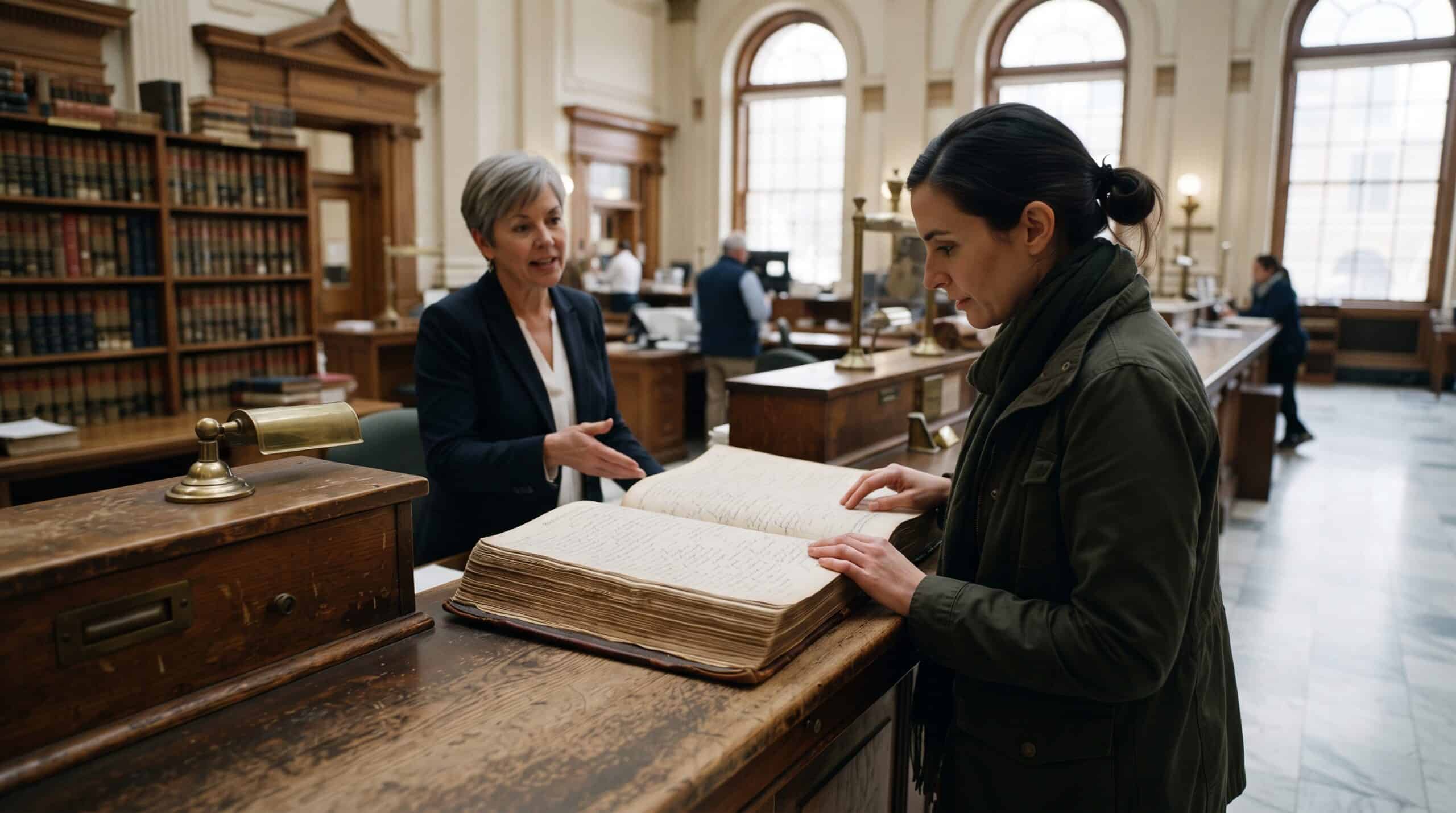
Anyone researching how to find out who owns a property should check the office that records land documents. In the United States, this may be called the county recorder, registry of deeds, register of deeds, clerk, or land records office.
A deed is a legal instrument used to transfer an interest in property. Recorded documents may identify the grantor, grantee, recording date, legal description, and instrument type.
Search by owner name, parcel number, document number, or legal description when possible. Match the parcel or legal description instead of relying only on a similar address.
The latest recorded deed may identify the current record owner, but one document is not always a complete title examination. Corrections, trusts, probate matters, court orders, or later instruments may affect the result.
Verify Ownership Source Authority
| Source | What It May Reveal | Main Limitation |
|---|---|---|
| Assessor or tax database | Likely owner, mailing address, parcel, and assessment details | May lag behind recent transfers |
| Recorder or registry | Recorded deeds and other land instruments | Requires correct document and parcel matching |
| Business registry | Entity status, registered agent, and available filings | May not identify beneficial owners |
| Probate or court records | Representatives, orders, or ownership-related proceedings | Access and relevance vary |
| Title search | Recorded ownership, liens, exceptions, and chain information | Scope depends on the search and jurisdiction |
| Contact database | Possible phone, email, or mailing information | Does not prove ownership or authority |
Cross-validate public data sources to build an accurate chain of title and identify true decision-makers before initiating prospect outreach.
Trace an Entity Owner
Commercial assets and institutional portfolios are frequently held under single-purpose LLCs, shell corporations, or complex trusts that obscure true ownership in land records. Determining how to find out who owns a property when corporate entities hold the title requires auditing state business registries (Secretary of State filings), tracking registered agents, and cross-referencing manager addresses with corporate filings.
Note that a registered agent or trustee is rarely the primary decision-maker or beneficial owner. Delegating manual data mining and entity research to specialized real estate acquisitions support speeds up ownership unmasking, document verification, and decision-maker identification for off-market deals.
Check Probate and Court Records When Relevant
The search for how to find out who owns a property may lead to an estate, deceased owner, divorce, bankruptcy, foreclosure, guardianship, or another proceeding.
Probate records may identify a personal representative, executor, administrator, heirs, or court orders. A person living at the property may not be the record owner or authorized representative.
Court records can be restricted, incomplete online, or difficult to interpret. Obtain qualified legal or title assistance when inheritance, authority, or litigation affects a proposed transaction.
Use Title Professionals for Important Decisions
Public research can identify likely ownership, but it does not guarantee marketable title. A title company, closing attorney, conveyancer, or another qualified professional may need to examine the chain of title and recorded interests.
A professional search may identify mortgages, liens, easements, judgments, restrictions, ownership defects, or other exceptions. Its scope and legal effect vary by jurisdiction and engagement.
Before signing a contract, sending a legal notice, paying funds, or relying on someone’s authority, confirm the level of verification required.
Separate Ownership From Contact Research
Contact databases, skip-tracing tools, directories, and social profiles may help locate a person associated with a property. They do not establish ownership.
A rigorous ownership discovery workflow isolates legal title data before initiating skip-tracing or cold outreach. Delegating manual data collection to a specialized real estate lead generation virtual assistant allows deal-sourcing teams to maintain clean CRM pipelines, organize verified parcel records, and eliminate dead-end contact lists.
Contact information may be outdated, shared, reassigned, or connected to the wrong person. Calling, texting, email, privacy, and do-not-contact requirements vary by jurisdiction and communication method.
Preserve the Verification Trail
Record the property identifiers, sources searched, document numbers, entity names, relevant dates, conflicting information, and unresolved questions.
Note when each source was reviewed because ownership and contact information can change. If records disagree, escalate the discrepancy for additional research or professional review.
Build a High-Velocity Ownership Discovery Pipeline
Researching how to find out who owns a property demands high data accuracy and thorough manual cross-referencing. Broad search tactics often lead to dead-end records, outdated contacts, or obscured legal entities.
Offloading high-volume record searches, entity unmasking, and CRM data entry to remote specialists from Vesta VA enables acquisition teams to focus on underwriting, deal structuring, and seller negotiations.